

 de
de it
it ja
ja zh
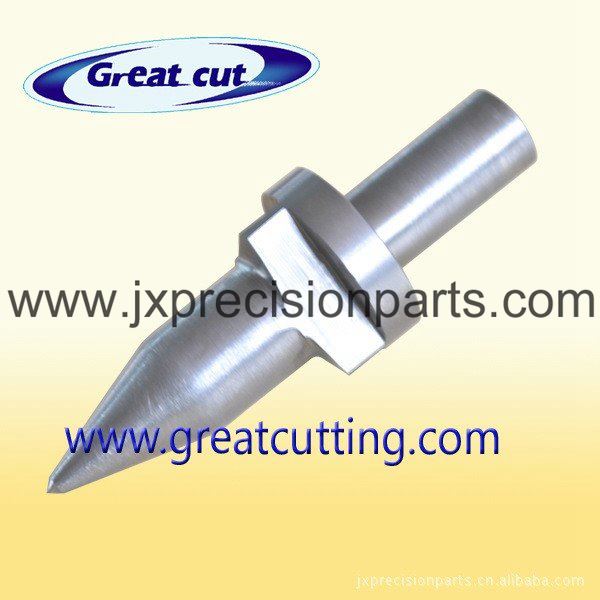
zhFlow Drill / Friction Drill Bit
Product Details
Flow Drill Description:
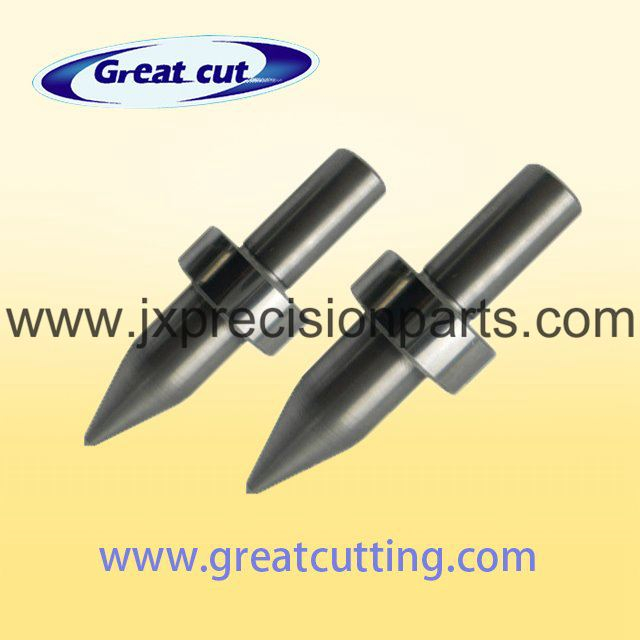
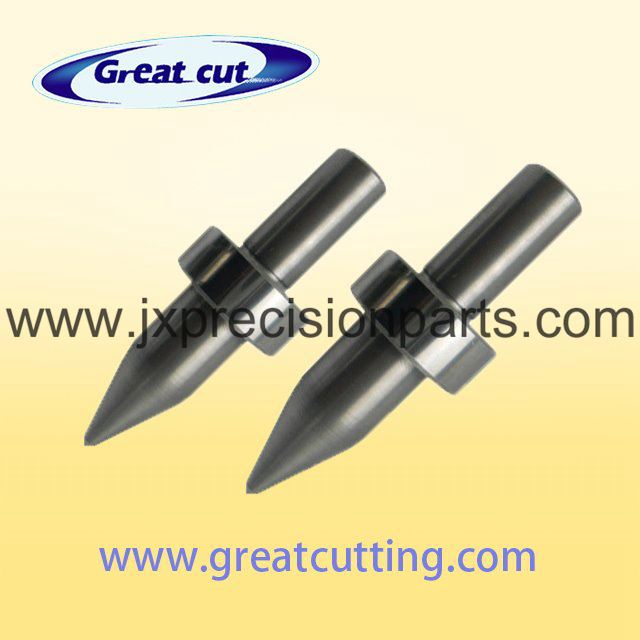
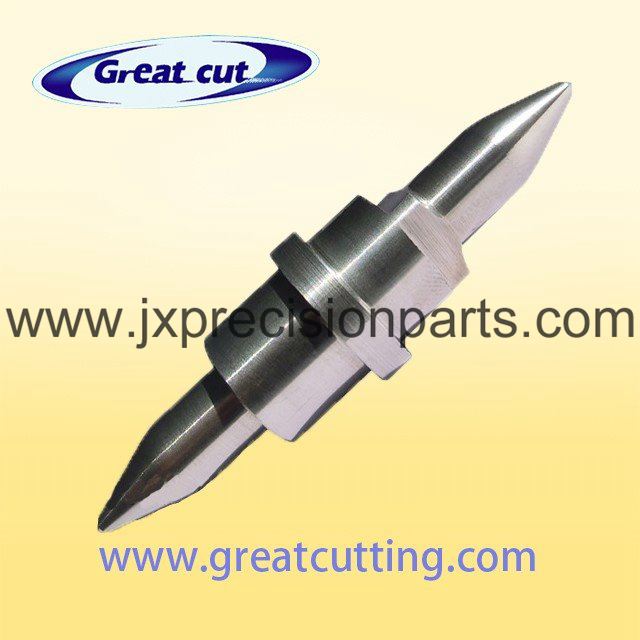
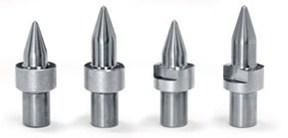
The flow drill is made of high-hardness tungsten carbide. The forming part of the drill bit consists of a polygon with four small flat surfaces. When the drill bit rotates at high speed, the friction between these four small flat surfaces and the workpiece material generates huge heat, forming the material. The drill bit is designed with an almost flat cone, transitioning to a cone, and then to a cylinder. The conical and cylindrical parts of the drill bit are actually composed of the polygon mentioned above. The cylindrical part of the drill bit determines the diameter of the hole.
Application Scenarios:
Suitable for the following occasions:
★ Extended threads required
★ Welding partner, multi-layer heat exchanger
★ Bearing seat
★ Threaded connection of stainless steel construction or metal furniture
Machining Advantages:
1. Chipless, the thread can withstand tension and torsion
2. No chip processing required, no need to remove waste.
3. High boss forming precision.
4. Suitable for various tapping machines.
5. Fast speed, long service life, improved output.
6. Suitable for a variety of flow drill materials
Product Specifications:
Flow Drill Specifications:
The diameter range of standard flow drill bits is 2.0 mm to 25.4 mm.
The specification and size of flow drills are generally distinguished according to the thread specifications. Common specifications include:
Metric coarse/fine (M): M3, M4, M5, M6, M8, M10, M12, M14, M16, M18, M20;
American Taper Pipe Thread (NPT): 1/8'', 1/4'', 3/8'', 1/2'', 3/4''.
British Standard Pipe Thread (BSP): G1/8, G1/4, G3/8, G1/2, G3/4;
American Coarse/Fine (UNC/UNF): No.4, No.5, No.6, No.8, No.10, No.12, 1/4, 5/16, 3/8, 7/16, 1/2, 9/16, 5/8, 3/4;
Special specification flow drill bits can be customized according to user needs.
Product Categories:
1. Classified by the surface after machining: "Standard Flow Drill (Round Port Flow Drill)" and "Flat Port Flow Drill (Scraping Edge Flow Drill)"
(1) Standard Flow Drill (Round Port Flow Drill)
The flow drill bit penetrates the workpiece while forming a convex ring on the workpiece surface. The boss is suitable for thread sealing or nut washers.
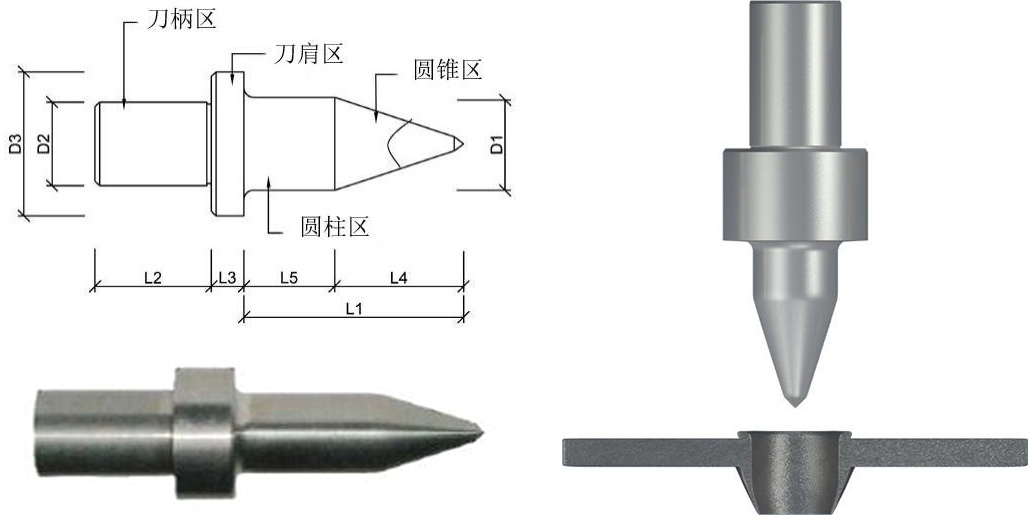
(2) Flat Port Flow Drill (Scraping Edge Flow Drill).
The middle stepped part of the flow drill bit is ground with a milling cutter edge. When the flow drill bit penetrates the workpiece to form a bushing, the convex ring on the workpiece surface is removed (milling and chamfering), making the workpiece surface smooth.
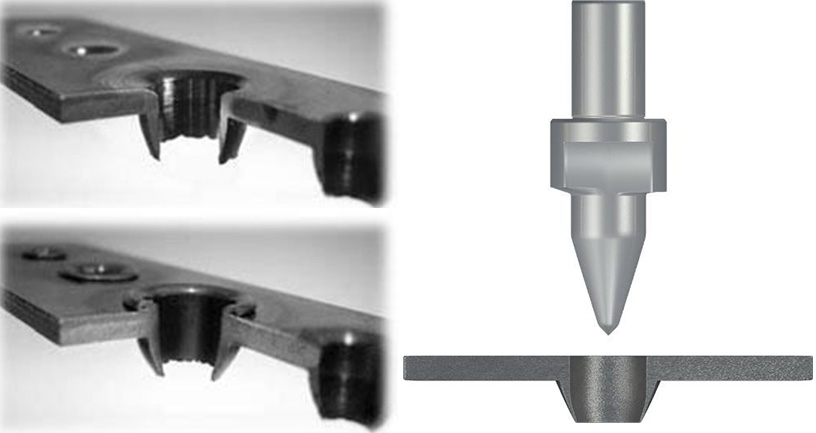
2. fdrill flow drills are divided into short drills and long drills according to the thickness of the workpiece
Short drill: used for ordinary thin-walled parts. Suitable for penetrating workpieces with a thickness of 0.8mm-3mm. The cylindrical part of the drill bit is short, and the extruded hole is conical, which can enhance tapping strength.
Long drill bit: used for thick workpieces or straight holes. Suitable for penetrating workpieces with a thickness greater than 3mm-12mm. The cylindrical part of the drill bit is longer, and the extruded hole is also longer.
Flow Drill Process:
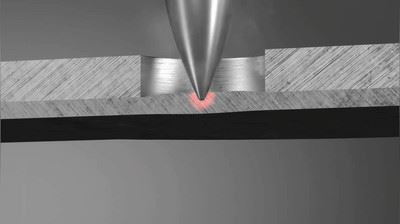
The flow drill bit contacts the material with higher axial pressure and a reasonable speed. The generated heat makes the material soft and malleable enough to be formed or perforated. When the flow drill drills into the material, some of the displaced material forms a ring around the upper surface of the workpiece. The rest of the material comes from the bushing on the lower surface of the workpiece. All this happens within a few seconds. The thickness of the resulting collar and bushing can reach 3 times the thickness of the original material. The diameter of the bushing is precisely determined by the cylindrical part of the flow drill. This process does not disturb the internal structure of the material. Therefore, the formed bushing has very high strength and can be used for bearing sleeves, or when threading separately, it can provide a high-torque threaded surface with very high pull-out strength specifications.
Applications:
The flow drill process can be used in any application where the material thickness does not support a threaded surface or sleeve bearing application. When you need to weld or repair nuts or special inserts, consider flow drilling. You will improve quality and save a lot of money.
The flow drill can be used on standard drill presses, NC or CNC systems, with motor capacities from 1.5 to 3.5 kw. The required speed (RPM) ranges from 1000 to 3500 RPM.
However, forming taps offer multiple advantages. For ductile machined materials, thread forming can provide better dimensional control and stronger threads while improving tool life and productivity.
Unlike thread cutting, no material is removed during thread forming. Instead, the process displaces material to generate the thread form.
Since the metal structure is cold-worked along the thread profile, the produced threads are generally stronger and have a smooth, polished surface finish. Compared with traditional taps, cold forming taps can run at higher speeds and feeds.
Cold forming technology has been used to produce threads for more than 100 years. Tap designs have changed greatly since then. Combined with the latest coatings, this ensures a very long tool life in most applications.
Forming taps must be applied to materials with good cold formability. This includes steel, stainless steel, light metals, light metal alloys and other materials with tensile strength up to 1200N/mm2. Generally, materials that produce continuous chips during drilling are very suitable for thread forming.
Combined with Formdrill, thread forming will improve quality and output.